


Choose Product
Identify Problem
03
Find Solutions
Refrigerator ice maker not working
Brand:Frigidaire
Model:FRT18IS6CWC
Product:Refrigerator

Featured Video
Top 6 Reasons Refrigerator Ice Maker Isn’t Working?
03:45
Common solutions for: Refrigerator ice maker not working
01 - Freezer Temperature is Above 10 Degrees F (-12C)
If the freezer temperature is above 10 degrees Fahrenheit (-12 Celsius), the ice maker will not produce ice cubes efficiently. The freezer temperature should be set between 0 and 5 degrees Fahrenheit (-18 to -15 Celsius) for the ice maker to work properly.
Top Solution
02 - Water Inlet Valve
The water inlet valve is an electrically-controlled valve that opens to supply water to the dispenser and ice maker. If the water inlet valve is defective, or if it has insufficient pressure, it won’t allow water to flow through. As a result, the ice maker won’t make ice. The valve requires at least 20 psi to function properly. Make sure that the water pressure to the valve is at least 20 psi. If the water pressure is sufficient, use a multimeter to check for power to the water inlet valve. If t...he water inlet valve has sufficient pressure and is getting power, but the ice maker won’t fill with water to make ice, replace the water inlet valve.
Genuine Part


Highly Likely
03 - Ice Maker Assembly
One component of the ice maker assembly might be defective. Since many of the ice maker components are not sold separately, you may need to purchase and replace the entire ice maker assembly. Before replacing the ice maker assembly, check the water inlet valve, water line, and fan. If none of these parts are at fault, and the freezer temperature is at least 15 degrees Fahrenheit, replace the ice maker assembly.
Genuine Part
Easy Fix

Fits your Frigidaire Refrigerator
$190.44

1:40
Step-by-Step Ice Maker Assembly Replacement
Technician Verified
Difficulty:
Very Easy

Genuine Part

Fits your Frigidaire Refrigerator
$192.21
1:40
Step-by-Step Ice Maker Assembly Replacement
Technician Verified
Difficulty:
Easy
Genuine Part

Fits your Frigidaire Refrigerator
$141.77
1:40
Step-by-Step Ice Maker Assembly Replacement
Technician Verified
Difficulty:
Easy
Common
04 - Low Water Pressure from House Supply
The home may have insufficient water pressure. The water inlet valve supplies water to the ice maker and must have strong water pressure to work properly. You can check the water flow at the kitchen faucet to help determine if the home's water pressure is sufficient or not.
Common
05 - Confirm icemaker is On
Make sure the icemaker is turned on and the arm or paddle is able to move freely. On in-door ice-dispensing models, with the door open make sure the indicator light stays on steadily when the ice dispenser flap and door switch are pressed.
Common
06 - Frozen fill tube on ice maker
Low water pressure or a defective water inlet valve can cause the ice maker's fill tube to become clogged with ice, preventing water from entering the ice maker tray. You can unplug the refrigerator to manually defrost in order to thaw out the frozen fill tube, but you should confirm there is strong water pressure at the kitchen faucet and be aware that the water inlet valve may not be functioning properly.
Common
07 - Dispenser door stuck open
If the dispenser door is stuck open, warm air can enter the ice maker compartment causing frost buildup and potentially stopping the ice maker. Remove any items that may be keeping the dispenser door from closing.
Common
08 - Door Switch
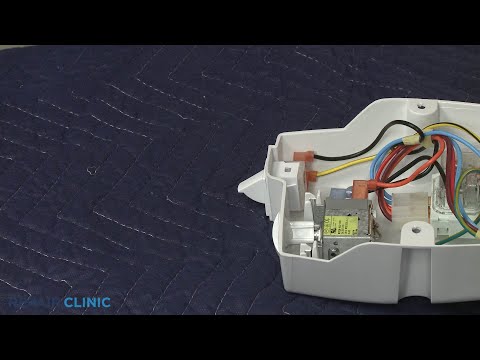
The door switch turns off the ice and water dispenser when the refrigerator door is open. If the door switch fails, the dispenser will not turn on. To determine if the door switch is defective, use a multimeter to test it for continuity. If the door switch does not have continuity when activated, replace it.
Genuine Part

Fits your Frigidaire Refrigerator
$57.49
2:14
Step-by-Step Door Switch Replacement
Technician Verified
Difficulty:
Easy
Common
09 - Power reset
After a power surge or power outage, refrigerator ice maker operation could be temporarily affected. Full operation can sometimes be restored through a power reset by either unplugging the appliance's power cord for a few minutes and then plugging it back in or switching off the circuit breaker for the refrigerator then switching it back on.
Common
10 - Wire Harness
A wire harness sends power between the electrical components and the control board or other components. If a wire harness becomes damaged, certain components may not receive the proper power or signals. Check the appropriate wire harnesses for breaks or loose connections. A damaged wire harness will need to be replaced.
Genuine Part

Fits your Frigidaire Refrigerator
$64.96

3:20
Step-by-Step Wire Harness Replacement
Technician Verified
Genuine Part

Fits your Frigidaire Refrigerator
$83.11
3:20
Step-by-Step Wire Harness Replacement
Technician Verified
Less Common
Shop by Popular Frigidaire Refrigerator Models
Frigidaire CFHT1513LZ3 Refrigerator PartsFrigidaire CFHT1513LZ4 Refrigerator PartsFrigidaire FFHS2611PFEA Refrigerator PartsFrigidaire FFHT1513LS4 Refrigerator PartsFrigidaire FFSS2615TS0 Refrigerator PartsFrigidaire FFTR2126LQ2 Refrigerator Parts
Frigidaire FGHC2331PFAA Refrigerator PartsFrigidaire FGHS2631PF4A Refrigerator PartsFrigidaire FGHS2655PF5A Refrigerator PartsFrigidaire FGUS2642LF2 Refrigerator PartsFrigidaire FPHS2387KF5 Refrigerator PartsFrigidaire FRS26H5ASB4 Refrigerator Parts
Frigidaire FRS26H5ASB5 Refrigerator PartsFrigidaire FRS26R4A Refrigerator PartsFrigidaire FRS6LR5EM8 Refrigerator PartsFrigidaire FRT17B3AW2 Refrigerator Parts