


Order by 2:00 a.m., and we'll ship the same day

Price Match Guarantee
Order by 2:00 a.m., and we'll ship the same dayChoose Product
Identify Problem
03
Find Solutions
Microwave not working
Brand:Hotpoint
Model:RVM1535DM2WW
Product:Microwave
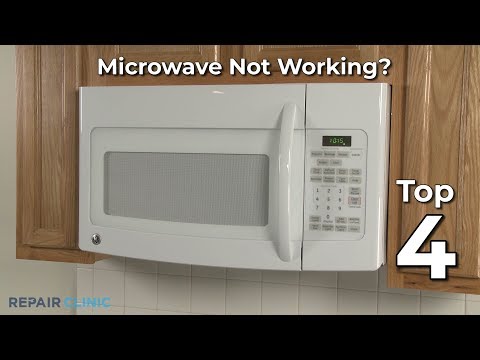
Featured Video
Microwave Not Working? Microwave Oven Troubleshooting
02:13
Common solutions for: Microwave not working
01 - Line Fuse
If too much current passes through the microwave circuitry, the line fuse will blow. If the line fuse blows, the microwave won’t start. To determine if the line fuse is at fault, use a multimeter to test it for continuity. If the fuse does not have continuity, replace it. In addition, you should investigate and resolve the problem that caused the fuse to blow. If you don’t resolve the underlying issue, the new fuse will blow too. (Caution: The microwave oven can store thousands of volts of elect...ricity in its high voltage capacitor, even after the microwave oven has been unplugged. Due to the potential for electric shock, it is extremely dangerous to replace the electronic components in a microwave. Only a licensed technician should replace the line fuse.)
Genuine Part


Top Solution
02 - Switch Holder
The microwave switch holder is the component that houses the door switches behind the control panel. If the switch holder is damaged or misaligned, one of more switches may not be actuated when the microwave door is closed, resulting in the microwave not working. You will need to uninstall the control panel and inspect the switch holder to confirm it is in good condition and secured properly. Replace the switch holder with a new one if necessary.
Genuine Part

Fits your Hotpoint Microwave
$71.16Save $288.57 by Fixing it Yourself

5:03
Step-by-Step Switch Holder Replacement
Technician Verified
Difficulty:
Easy

Avg. Repair Time:Under 1 hour
Top Solution
03 - Thermostat
If the microwave overheats, the thermostat trips to cut off voltage to the microwave. If the thermostat is shorted open, it may not allow voltage to reach the high voltage components. To determine if the thermostat is at fault, use a multimeter to test it for electrical continuity. If the thermostat does not have continuity, and it cannot be reset, replace it.
Highly Likely
04 - Incoming Power Problem
The electrical outlet may not be getting power. To determine if the outlet is getting power, try plugging something else into the outlet. If the outlet is not getting power, check the home circuit breakers or fuses.
Highly Likely
05 - Thermal Fuse
The thermal fuse cuts off power to the microwave if the microwave overheats. To determine if the thermal fuse has blown, use a multimeter to test it for continuity. If the fuse does not have continuity, replace it. The thermal fuse cannot be reset—if the fuse is blown, it must be replaced. (Caution: The microwave oven can store thousands of volts of electricity in its high voltage capacitor, even after the microwave oven has been unplugged. Due to the potential for electric shock, it is extremel...y dangerous to replace the electronic components in a microwave. Only a licensed technician should replace the thermal fuse.)
Genuine Part
Fits your Hotpoint Microwave
$39.30Save $223.86 by Fixing it Yourself

2:40
Step-by-Step Thermal Fuse Replacement
Technician Verified
Difficulty:
Easy
Avg. Repair Time:Under 30 minutes
Common
06 - Diode
The diode converts the A/C power output of the transformer to D/C, doubling the voltage to nearly 5,000 volts. This high voltage powers the magnetron to heat the food. If the diode burns out, the magnetron won’t receive enough voltage to operate, preventing the microwave from working. When the diode fails, it is often visibly burned out. Inspect the diode and if the diode is burned out, replace it. If inspecting the diode proves inconclusive, test it with a multimeter that uses a 9-volt battery ...or put a 9-volt battery in series with the diode. When the leads are reversed, the diode should only have continuity in one direction. (Warning: The microwave oven can store a lethal amount of electricity in its high voltage capacitor, even after the microwave oven has been unplugged. Due to the high running voltage and the potential for electric shock, it is extremely dangerous to replace the electronic components in a microwave. Only a licensed technician should replace the diode.)
Genuine Part

Fits your Hotpoint Microwave
$57.06Save $296.08 by Fixing it Yourself

3:37
Step-by-Step Diode Replacement
Technician Verified
Difficulty:
Moderate
Avg. Repair Time:Under 1 hour
Common
07 - Thermoprotector
If the microwave overheats, the thermoprotector trips to cut off voltage to the microwave. To determine if the thermoprotector is at fault, use a multimeter to test it for continuity. If the thermoprotector does not have continuity, and it cannot be reset, replace it.
Genuine Part

Fits your Hotpoint Microwave
$41.34Save $368.04 by Fixing it Yourself

6:31
Step-by-Step Thermoprotector Replacement
Technician Verified
Difficulty:
Easy
Avg. Repair Time:Under 1 ½ hours
Common
08 - Power reset
After a power surge or power outage, appliance operation could be temporarily affected. Full operation can sometimes be restored through a power reset by either unplugging the unit's power cord for a few minutes and then plugging it back in or switching off the circuit breaker for the microwave then switching it back on.
Common
09 - Door Switch
Most microwaves have three or four door switches. When the microwave door closes, the door switches actuate in sequence to ensure that the door is closed properly. If any of the door switches fail, the microwave will not start or heat. To determine if any of the door switches are defective, use a multimeter to test each of the switches for continuity. If any of the door switches do not have continuity, the switch or switches should be replaced.
Genuine Part

Fits your Hotpoint Microwave
$39.40Save $298.04 by Fixing it Yourself

2:49
Step-by-Step Door Switch Replacement
Technician Verified
Difficulty:
Easy
Avg. Repair Time:Under 1 hour
Genuine Part

Fits your Hotpoint Microwave
$38.80Save $294.75 by Fixing it Yourself
2:49
Step-by-Step Door Switch Replacement
Technician Verified
Difficulty:
Easy
Avg. Repair Time:Under 1 hour
Uncommon But Possible