


Choose Product
Identify Problem
03
Find Solutions
Refrigerator water dispenser not working
Brand:GE
Model:CSW25LSWASS
Product:Refrigerator
Featured Video
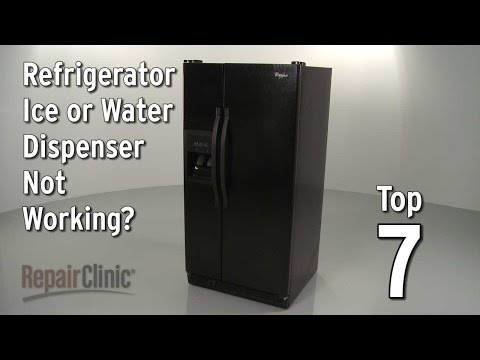
Top 7 Reasons Refrigerator Dispenser Isn’t Working?
03:47
Common solutions for: Refrigerator water dispenser not working
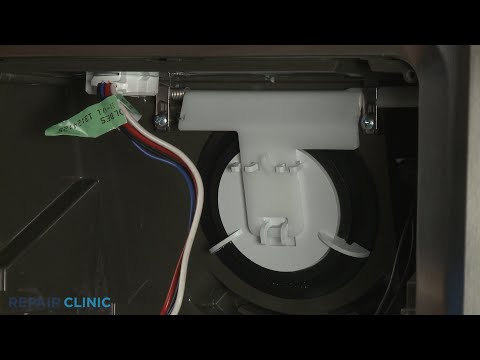
01 - Dispenser Actuator
The dispenser actuator is the component that activates the switch or switches to send voltage to the dispenser. If the dispenser actuator is damaged, it may be unable to activate the switch. Inspect the dispenser actuator for any damage and replace with a new one if necessary.
Genuine Part


Fits your GE Refrigerator
$11.19
3:46
Step-by-Step Dispenser Actuator Replacement
Technician Verified
Difficulty:
Easy

Top Solution
02 - Water Tube in Door is Frozen
To determine if the water supply tube is frozen, disconnect the tube at the bottom of the door and blow air through it. If air does not pass through, this indicates that the water supply tube is frozen. If the water supply tube is frozen, thaw it out. In addition, ensure that the freezer is kept at the proper temperature. The freezer temperature should be kept from 0 to10 degrees Fahrenheit (-18 to -12 degrees Celsius). If the freezer is too cold, the water line may freeze.
Top Solution
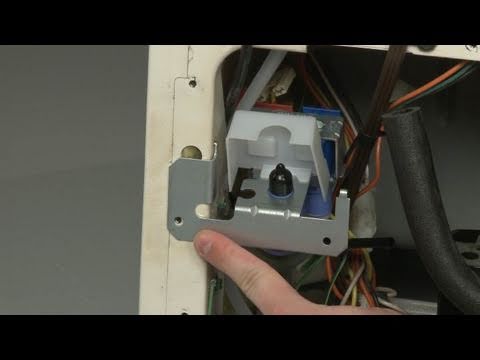
03 - Water Inlet Valve
The water inlet valve opens to supply water to the dispenser. If the water inlet valve is defective, or if the water pressure is too low, the water valve will not open. The valve requires at least 20psi to function properly. Make sure that the water pressure to the valve is at least 20 psi. If the water pressure is sufficient, use a multimeter to test the water inlet valve for continuity. If the water inlet valve does not have continuity, replace it.
Genuine Part
Fits your GE Refrigerator
$87.69
2:10
Step-by-Step Water Inlet Valve Replacement
Technician Verified
Difficulty:
Easy
Top Solution
04 - Low Water Pressure from House Supply
The home may have insufficient water pressure. The water inlet valve requires strong water pressure to supply water to the water dispenser. You can check the water flow at the kitchen faucet to help determine if the home's water pressure is sufficient or not.
Highly Likely
05 - Misaligned water filter
Water filter may not be seated properly. Remove and reinstall the water filter. For optimal performance, refrigerator water filters should be replaced every six months or after 200-300 gallons (760-1150 liters) of water have been dispensed - whichever comes first. Replace the water filter if needed.
Highly Likely
06 - Home's water supply valve not fully open
The refrigerator is connected to a water supply valve that may not be fully open. If the water line was disconnected or the valve was shut off for service, it may not have been turned back on to the fully opened position.
Highly Likely
07 - Kinked Water Supply Line
Pull out the refrigerator and confirm the water supply line is not kinked. A kinked water supply line will cut off or reduce the water supplied to the refrigerator. It is best to replace the water line if it looks damaged.
Highly Likely
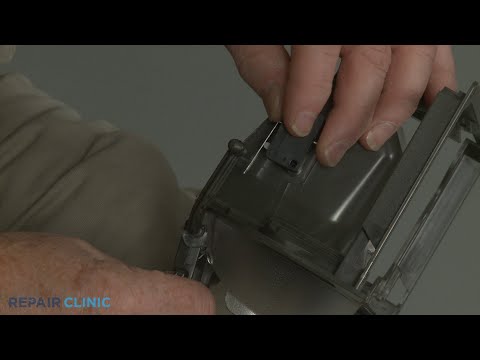
08 - Dispenser Switch
The dispenser switches send voltage to the dispenser. If one of the dispenser switches is defective, the dispenser will not work. To determine if a dispenser switch is defective, use a multimeter to test each switch for continuity. If a dispenser switch does not have continuity, replace it.
Genuine Part
Fits your GE Refrigerator
$59.16
3:24
Step-by-Step Dispenser Switch Replacement
Technician Verified
Difficulty:
Easy
Highly Likely
09 - Water Filter Housing
On many refrigerators, the incoming water will pass through a water filter before reaching the dispenser. If the water filter housing is damaged, water may not flow through the housing when the filter is installed. Inspect the water filter housing for damage and confirm it is properly seated. If necessary replace the damaged housing with a new one.
Genuine Part
Common
10 - Door Not Fully Closing
Check to see that the doors are closing properly. If a door bin or food item is keeping the door open slightly the refrigerator may not cool properly, which can cause the refrigerator to run constantly.
Common
11 - Water Dispenser Control is Locked
The ice and water dispenser will not work when locked (check for a lock symbol on the control panel). If the control is locked you will need to press and hold a "lock" button or another combination of buttons for 5 to 10 seconds to unlock the control.
Common
12 - Water Filter
A clogged water filter can restrict the flow of water to the dispenser and prevent the dispenser from working properly. The water filter should be replaced about every six months to maintain proper water flow and ensure water quality.
Genuine Part
Easy Fix

Common
13 - Control Board
The dispenser control board governs most of the functions of the dispenser system. If the control board is faulty, it may stop supplying power to the entire dispenser system. If only one dispenser part is not working, test each of the dispenser components before testing the control board. It is more likely that a single part has failed. If the entire dispenser system is not working, the control board is more likely to be at fault.
Genuine Part

Fits your GE Refrigerator
$275.00

2:10
Step-by-Step Control Board Replacement
Technician Verified
Difficulty:
Easy
Common
14 - Dispenser Funnel Guide
A damaged or misaligned dispenser funnel guide can prevent water from being properly dispensed. Examine the funnel guide and replace it with a new one if the old guide is cracked or otherwise damaged.
Genuine Part
Genuine Part
Uncommon But Possible